
You submitted your resume, caught an employer’s attention, and now you’ve been invited to a phone interview. That’s great news; however, don’t make the mistake of thinking the call is simply a formality.
Phone interviews and recruiter screens are often an important first step in today’s hiring process. Employers may use them to confirm your qualifications, learn more about your career goals, discuss salary expectations, and decide whether to move you forward to a longer video or in-person interview.
If it’s been several years since your last job search, the process may feel different from what you remember. The good news? A little preparation can make a significant difference.
Here are seven phone interview tips to help you make a confident, professional first impression.
1. Be Ready Before the Call Begins
Plan to be completely ready at least 10 minutes before your scheduled interview. Make sure your phone is charged, notifications are silenced, and you have a reliable signal.
Also double-check the invitation. Are they calling you, or are you expected to call a number or join an online meeting?
Keep the recruiter or interviewer’s name, phone number, and email address handy in case there is a technical problem.
If the interviewer hasn’t called a few minutes after the scheduled start time, don’t panic. Give them a reasonable grace period and then send a brief, professional email to confirm that you’re available and ready.
2. Find a Quiet, Professional Space
Background noise can quickly become distracting during a phone interview.
Choose a quiet location where you’re unlikely to be interrupted. Close the door, silence notifications on your computer and other devices, and do what you can to minimize barking dogs, television noise, deliveries, and other distractions.
Avoid conducting the interview from a coffee shop, busy public space, or anywhere else where it may be difficult to hear or maintain privacy.
If you’re interviewing while you’re currently employed, plan carefully. You don’t want to conduct a confidential job interview where coworkers or your manager can overhear the conversation.
3. Treat a Phone Screen Like a Real Interview
One of the biggest mistakes candidates can make is assuming a phone screen doesn’t require much preparation.
It does.
Before your interview, review the job description and research the organization. Be prepared to explain why you’re interested in the opportunity and how your experience connects with the employer’s needs.
You should also be ready to answer common screening questions such as:
- “Tell me about yourself.”
- “Why are you interested in this position?”
- “Why are you considering leaving your current job?”
- “What experience do you have that relates to this role?”
- “What are your salary expectations?”
- “When would you be available to start?”
Don’t memorize answers word-for-word. Instead, identify the main points and examples you want to communicate so that your answers sound natural and conversational.
4. Keep Your Resume and a Few Notes in Front of You
Here’s one advantage of a phone interview: the interviewer can’t see your desk.
Use that to your advantage, but don’t overdo it.
Have your resume, the job posting, and a few carefully prepared notes nearby. You might jot down two or three accomplishments you want to mention, questions you want to ask, and important information you’ve learned about the organization.
However, don’t write complete scripts and read them aloud. Interviewers can often tell when someone is reading, and your answers may sound stiff or disconnected.
Your notes should serve as prompts, not a script.
5. Pay Attention to Your Voice and Energy
During an in-person or video interview, employers can see your facial expressions and body language. During a traditional phone interview, your voice has to do more of the work.
Speak clearly, avoid rushing, and let your enthusiasm for the opportunity come through naturally.
Some people find that standing during a phone interview gives them more energy. Others are more comfortable sitting at a desk. Choose whatever helps you feel focused and confident.
And yes, smiling can still help. Even though the interviewer can’t see you, smiling can change your tone and help you sound warmer and more engaged.
6. Be Prepared for Salary Questions
Salary discussions can occur surprisingly early in today’s hiring process, particularly during an initial recruiter screen.
You may be asked about your salary expectations or whether a stated compensation range works for you. Before the interview, research an appropriate market range for the position based on the role, location, industry, and your level of experience.
If the employer has published a salary range, review it before the call.
You don’t necessarily have to commit yourself to one exact number immediately. The goal is to understand whether you and the employer are reasonably aligned while avoiding surprises later in the process.
7. Ask Good Questions and Find Out What Happens Next
A phone interview isn’t just an opportunity for the employer to evaluate you. It’s also your opportunity to learn more about the position.
Prepare a few thoughtful questions that demonstrate genuine interest. You might ask about the priorities for the person hired, the team, how success will be measured, or what prompted the opening.
Before ending the conversation, ask about the next steps and anticipated hiring timeline. This gives you a better idea of when you might hear from the employer and when a follow-up would be appropriate.
Don’t Forget the Follow-Up
Your interview isn’t quite over when you hang up.
Send a concise thank-you email, ideally within 24 hours. Thank the interviewer for their time, reinforce your interest in the opportunity, and briefly reference something meaningful you discussed.
Keep it short and genuine. You don’t need to write an essay.
And if you don’t hear back by the timeline the interviewer provided, it’s perfectly appropriate to send a polite follow-up asking whether there are any updates on the hiring process.
Phone Interview, Video Interview, or In-Person Interview: Preparation Still Matters
Hiring processes have changed, and you may encounter several interview formats before receiving an offer. Your first conversation could be with a recruiter by phone, followed by a video interview with the hiring manager and additional virtual or in-person interviews with other members of the team.
Whatever the format, don’t underestimate the importance of that first conversation.
For experienced professionals—especially those returning to the job market after many years—the key isn’t trying to sound younger or becoming someone you’re not. It’s showing employers that your experience is relevant, your skills are current, and you understand the challenges they need the person in this position to solve.
Prepare carefully, listen closely, communicate your value clearly, and treat every interview as an opportunity to learn as well as to make a strong impression.
Not sure whether your interview skills are ready for today’s hiring process? Contact us to learn more about interview coaching and get prepared for your next opportunity.

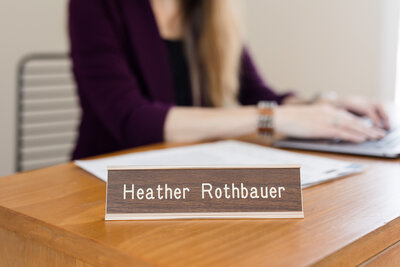
Hi, I’m Heather!
a Certified Professional Resume Writer and live in the Northwoods of Wisconsin.
I love being outdoors, tending to my chickens, helping my son with his maple syrup business, and chatting about resumes (it’s true). Here you’ll find resume tips, cover letter ideas, job searching techniques, and the latest ways to stand out from other job seekers. Browse a while, read a few posts, and check-out how to make YOUR resume a superstar!
Get your free resume review!
Let me help you - I’ll review your document, give you advice, and potential ideas for improvement!
Not sure if your resume is up to today’s standards?
RESUME REVIEW
free

This website was designed using 100% solar power

Explore
A Certified Professional Resume Writer, member of the National Resume Writers’ Association, and the Professional Association of Resume Writers and Career Coaches. She’s written thousands of resumes for a variety of fields since 2008.
i'm dr. heather rothbauer-wanish
Serving clients in Eau Claire, WI, Minneapolis, MN, and throughout the United States